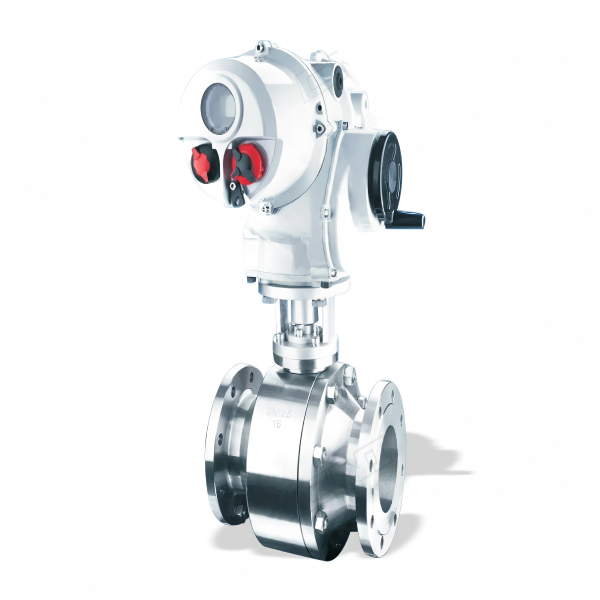
Ball valves are critical components in fluid control systems, renowned for their simplicity, reliability, and versatility. Since their inception in the 1950s, ball valves have evolved into a dominant valve type across industries such as petrochemicals, power generation, water treatment, and pharmaceuticals. This article explores the fundamental principles, design variations, material selection, and operational best practices of ball valves, supported by industry standards and real-world applications.
1. Working Principle and Structural Design
A ball valve operates by rotating a spherical disc (the "ball") with a bore through its center. When the bore aligns with the pipeline, the valve is fully open; when rotated 90°, the solid portion of the ball blocks flow, achieving a tight shutoff. Key structural components include:
- Ball: Typically made of stainless steel, carbon steel, or alloy materials, with surface treatments like nickel plating or hardfacing for wear resistance.
- Seats: Soft seats (e.g., PTFE, RPTFE, PPL) offer superior sealing but are limited by temperature (<300°C for PPL). Metal seats (e.g., Stellite-hardened) are used in high-temperature or abrasive applications.
- Stem: Connects the actuator to the ball, with anti-blowout designs to prevent accidental ejection under pressure.
- Body: Available in one-piece, two-piece, or three-piece configurations. Three-piece designs allow in-line maintenance without pipeline disassembly.
1.1 Floating vs. Trunnion-Mounted Balls
- Floating Ball: The ball is unrestrained except by the seats. Under pressure, it shifts to compress the downstream seat, ensuring sealing. This design is cost-effective for smaller valves (≤DN150) but requires higher torque for larger sizes.
- Trunnion-Mounted Ball: The ball is anchored at the top and bottom, reducing operating torque and enabling higher pressure ratings (up to Class 2500). Trunnion valves are preferred in large-bore or high-pressure applications.
2. Material Selection and Performance Limits
Ball valve materials must align with the operating medium and environmental conditions. Common materials include:
- Body Materials:
- Carbon steel (WCB, A105): Suitable for non-corrosive fluids like water, steam, and oil (≤425°C).
- Stainless steel (CF8/304, CF8M/316): Resists corrosion in chemicals, food, and marine environments.
- Duplex stainless steel (e.g., UNS S31803): Used in aggressive environments like offshore oil platforms.
- Sealing Materials:
- PTFE: Excellent chemical resistance but limited to ≤130°C.
- RPTFE (reinforced PTFE): Higher strength and temperature tolerance (≤160°C).
- PPL (phenolic-impregnated laminate): Withstands temperatures up to 300°C and is ideal for steam systems.
2.1 Temperature and Pressure Ratings
Ball valves are rated according to standards such as ASME B16.34 and API 6D. For example:
- A Class 150 WCB ball valve with PTFE seats is rated for -29°C to 232°C and pressures up to 20 bar (290 psi).
- A Class 2500 trunnion-mounted valve with metal seats can handle pressures up to 420 bar (6,090 psi) at 200°C.
3. Applications and Industry Standards
Ball valves excel in applications requiring rapid shutoff, low leakage, and minimal maintenance. Key industries include:
- Oil and Gas: Used in pipelines, refineries, and LNG terminals. API 6D-compliant valves ensure fugitive emission control.
- Chemical Processing: Corrosion-resistant valves (e.g., CF8M with PFA seats) handle aggressive chemicals.
- Power Generation: High-temperature valves (e.g., PPL-seated) regulate steam in turbines.
- Water and Wastewater: Threaded or flanged ball valves control flow in distribution networks.
3.1 Compliance with Standards
- API 6D: Specifies design, testing, and qualification for pipeline valves.
- ISO 15848: Defines leakage classes for industrial valves (e.g., Class A for tight shutoff).
- FDA Compliance: Valves in food/pharmaceutical applications must use materials like 316L stainless steel and USP Class VI-certified seals.
4. Installation, Operation, and Maintenance
Proper installation and maintenance are critical to ball valve longevity.
4.1 Installation Guidelines
- Pipeline Alignment: Ensure the valve body is centered and aligned with the pipeline to avoid side loads on the stem.
- Actuator Mounting: For pneumatic/electric actuators, follow the manufacturer’s torque specifications to prevent stem deformation.
- Pre-Commissioning Checks:
- Verify valve rotation (90° from open to closed).
- Pressure-test seats and body integrity per ASME B16.34.
4.2 Routine Maintenance
- Lubrication: Apply grease to stem threads and seats annually. Use food-grade lubricants in sanitary applications.
- Seat Inspection: Replace soft seats every 2–3 years or after 100,000 cycles. Metal seats may last longer but require periodic hardness testing.
- Stem Packing Adjustment: Tighten packing glands to prevent leaks without over-constraining stem movement.
4.3 Troubleshooting Common Issues
| Issue | Cause | Solution |
|---|---|---|
| Valve jamming | Foreign objects in the ball bore | Disassemble and clean; install a strainer upstream. |
| External leakage | Loose flange bolts or damaged gasket | Retighten bolts to torque specs; replace gasket. |
| Internal leakage | Worn seats or scratched ball | Replace seats; re-lap the ball if damaged. |
| High operating torque | Corroded stem or misaligned ball | Lubricate stem; check for bearing wear. |
5. Advanced Ball Valve Technologies
5.1 V-Port Ball Valves
Used for throttling applications, these valves feature a V-shaped ball that provides linear flow characteristics. They are ideal for slurries and fibrous media.
5.2 Cryogenic Ball Valves
Designed for temperatures as low as -196°C (e.g., LNG service), these valves use extended bonnets to isolate the packing from the cold zone.
5.3 Triple-Offset Ball Valves
Combining the benefits of ball and butterfly valves, these designs achieve metal-to-metal sealing with minimal friction, suitable for high-pressure, high-temperature applications.
6. Future Trends
- Smart Valves: Integration with IoT sensors for predictive maintenance (e.g., monitoring seat wear via torque signatures).
- Sustainable Materials: Development of bio-based polymers for seat inserts to reduce environmental impact.
- Additive Manufacturing: 3D-printed valve bodies enable complex geometries and reduced lead times.
Conclusion
Ball valves remain indispensable in fluid control systems due to their reliability, efficiency, and adaptability. By selecting the right materials, adhering to installation standards, and implementing proactive maintenance, operators can maximize valve lifespan and minimize downtime. As industries demand higher efficiency and sustainability, innovations in ball valve technology will continue to drive progress.
FAQs
Q1: Can ball valves be used for throttling?
A: Standard ball valves are not recommended for throttling due to potential seat damage. Use V-port or segmented ball valves for precise flow control.
Q2: What is the difference between soft-seated and metal-seated ball valves?
A: Soft seats (e.g., PTFE) offer tight shutoff but are temperature-limited. Metal seats (e.g., Stellite) withstand higher temperatures and abrasive media but may have slight leakage.
Q3: How often should ball valves be inspected?
A: Critical valves in hydrocarbon service should be inspected annually. Non-critical valves may be inspected every 2–3 years.
Q4: Can ball valves be repaired in-line?
A: Three-piece ball valves allow seat and stem replacement without pipeline disassembly. One-piece valves require full removal for repairs.
Q5: What is the maximum pressure rating for a ball valve?
A: Trunnion-mounted ball valves can achieve ratings up to Class 2500 (420 bar/6,090 psi).
This article synthesizes technical data from industry leaders like Eicmation and API standards to provide a practical guide to ball valve technology. For specific applications, consult valve manufacturers for detailed specifications.