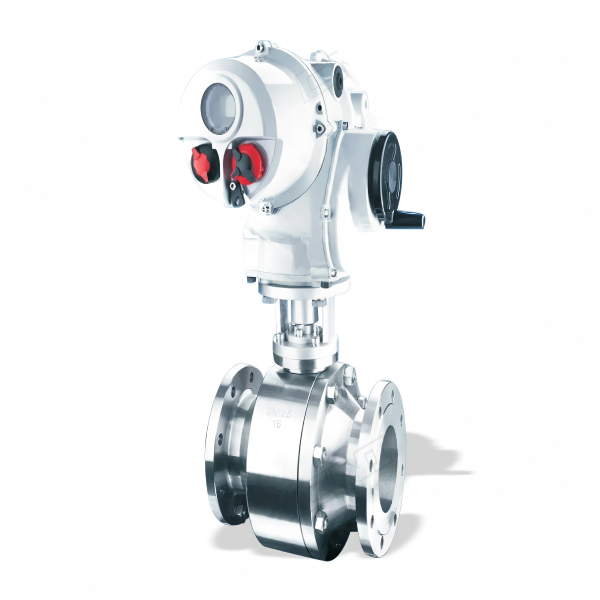
Ball valves have revolutionized fluid control systems with their robust design, quick operation, and minimal maintenance requirements. Since their patenting in the mid-20th century, these valves have become ubiquitous across industries, from residential plumbing to high-stakes oil and gas pipelines. This article explores the mechanics, materials, and modern advancements in ball valve technology, supported by real-world case studies and engineering best practices.
1. Mechanics of Ball Valves
At its core, a ball valve consists of a spherical disc with a central bore, housed within a valve body. Rotating the ball 90° via a lever, gearbox, or actuator toggles flow between open and closed states. Key components include:
- Ball: Precision-machined from metals like stainless steel or chrome-molybdenum alloys, often coated with chrome or tungsten carbide for wear resistance.
- Seats: Act as the sealing interface between the ball and body. Soft seats (e.g., PTFE, Nylon) provide bubble-tight shutoff but are temperature-sensitive. Metal seats (e.g., Inconel, Stellite) endure extreme conditions but may require higher torque.
- Stem: Designed to prevent blowout under pressure, with features like anti-static devices to dissipate friction-induced static electricity.
- Body: Available in one-piece (forged), two-piece (split-body), or three-piece (bolted) configurations. Three-piece designs simplify maintenance by allowing seat replacement without pipeline disassembly.
1.1 Floating vs. Trunnion-Mounted Ball Designs
- Floating Ball: The ball is held in place by the seats, which deform slightly under pressure to create a seal. This design is cost-effective for smaller valves (≤DN100) but demands higher torque for larger sizes.
- Trunnion-Mounted Ball: The ball is anchored at the top and bottom, reducing operating torque and enabling higher pressure ratings (up to ANSI Class 2500). Trunnion valves are ideal for large-bore applications like subsea pipelines.
2. Material Selection for Durability
The choice of materials determines a ball valve’s compatibility with fluids, temperature, and pressure.
2.1 Body Materials
- Carbon Steel (WCB, A105): Suitable for non-corrosive media like water, steam, and oil (temperature range: -29°C to 425°C).
- Stainless Steel (CF8/304, CF8M/316): Resists corrosion in acidic, alkaline, or saline environments. 316L stainless steel is FDA-approved for food and pharmaceutical applications.
- Duplex/Super Duplex Stainless Steel: Offers exceptional strength and corrosion resistance in offshore oil and gas (e.g., UNS S32750 for seawater injection).
2.2 Sealing Materials
- PTFE (Polytetrafluoroethylene): Ideal for general-purpose applications (≤130°C) but prone to cold flow under constant load.
- RPTFE (Reinforced PTFE): Enhanced with glass or carbon fibers for higher temperature (≤160°C) and pressure ratings.
- PPL (Phenolic-Impregnated Laminate): Withstands temperatures up to 300°C and is commonly used in steam systems.
- Metal Seats: Stellite-6 or Inconel 718 are hardfaced onto the ball and seats for abrasive media (e.g., slurries in mining).
3. Performance and Compliance Standards
Ball valves must adhere to international standards to ensure safety and reliability.
3.1 Key Standards
- ASME B16.34: Defines pressure-temperature ratings for valves. For example, a Class 150 WCB ball valve with PTFE seats is rated for 20 bar (290 psi) at 232°C.
- API 6D: Specifies design, testing, and qualification for pipeline valves, including fugitive emission testing (ISO 15848-1).
- ISO 5211: Standardizes mounting dimensions for actuators, enabling interchangeability.
3.2 Leakage Classes
- Class A (ISO 15848-1): Zero detectable leakage under test conditions (e.g., helium mass spectrometry).
- Class VI (ANSI/FCI 70-2): Allows ≤0.01% of rated Cv in bubble-tight shutoff tests.
4. Applications Across Industries
Ball valves’ versatility makes them indispensable in diverse sectors.
4.1 Oil and Gas
- Upstream: Trunnion-mounted ball valves with anti-blowout stems are used in high-pressure wellheads (up to 15,000 psi).
- Midstream: Full-bore valves minimize pressure drop in crude oil pipelines (e.g., 48-inch Class 600 valves).
- Downstream: Fire-safe valves (API 607) prevent leaks during refinery fires.
4.2 Chemical Processing
- Corrosion-resistant valves (e.g., Hastelloy C276) handle hydrochloric acid and sulfuric acid.
- Lined ball valves (PTFE/PFA) protect against aggressive chemicals in batch processes.
4.3 Power Generation
- High-temperature valves (PPL seats) regulate steam in supercritical power plants (600°C, 300 bar).
- Double-block-and-bleed (DBB) valves isolate instruments in nuclear reactors.
4.4 Water and Wastewater
- Resilient-seated ball valves (EPDM/NBR) control flow in municipal water networks.
- Anti-blockage designs (e.g., cavity-filled balls) prevent debris accumulation in sewage systems.
5. Installation, Operation, and Maintenance
Proper practices extend ball valve lifespan and performance.
5.1 Installation Best Practices
Pipeline Alignment: Use laser alignment tools to avoid side loads on the stem.
Actuator Sizing: Calculate torque requirements using formulas like:
Where = pressure, = ball seat area, = friction coefficient.
3. Pre-Commissioning:
- Hydrostatic test at 1.5× rated pressure for 10 minutes.
- Verify stem rotation (90° ± 2°).
5.2 Routine Maintenance
- Lubrication: Apply grease to stem threads and seats every 6–12 months. Use lithium-based grease for general applications.
- Seat Inspection: Replace soft seats every 3–5 years or after 50,000 cycles. Metal seats may last 10+ years but require hardness testing (Rockwell C scale).
- Stem Packing Adjustment: Tighten packing glands to prevent leaks without exceeding 25% of stem yield strength.
5.3 Troubleshooting Guide
| Symptom | Probable Cause | Recommended Action |
|---|---|---|
| Valve won’t open/close | Foreign object in ball bore | Disassemble and clean; install a Y-strainer upstream. |
| External leakage | Loose flange bolts | Retighten bolts to 70% of yield strength; replace gasket if damaged. |
| Internal leakage | Worn seats or scratched ball | Replace seats; re-lap the ball with 600-grit abrasive if minor damage. |
| High operating torque | Corroded stem or misaligned ball | Lubricate stem; check for bearing wear; replace if pitting exceeds 0.1 mm. |
6. Advanced Ball Valve Innovations
6.1 V-Port Ball Valves
These valves feature a V-shaped ball that provides equal-percentage flow characteristics, making them ideal for throttling applications (e.g., pulp and paper mills).
6.2 Cryogenic Ball Valves
Designed for LNG and hydrogen service, these valves use extended bonnets and vacuum-insulated bodies to maintain seat integrity at -196°C.
6.3 Triple-Offset Ball Valves
Combining the benefits of ball and butterfly valves, these designs achieve metal-to-metal sealing with minimal friction, suitable for high-pressure steam (Class 900, 500°C).
7. Future Trends
- Smart Valves: Integration with IoT sensors for real-time monitoring of seat wear, torque, and temperature.
- Sustainable Materials: Development of bio-based polymers for seat inserts to reduce carbon footprint.
- 3D Printing: Additive manufacturing enables lightweight valve bodies with complex internal cooling channels.
Conclusion
Ball valves remain a cornerstone of fluid control systems, offering unmatched reliability and adaptability. By selecting the right materials, adhering to installation standards, and implementing predictive maintenance, operators can ensure decades of trouble-free service. As industries demand greater efficiency and sustainability, ball valve technology will continue to evolve, driven by innovations in materials science and digitalization.
FAQs
Q1: Are ball valves suitable for throttling applications?
A: Standard ball valves are not recommended for throttling due to seat erosion. Use V-port or segmented ball valves for precise flow control.
Q2: What is the difference between a floating ball and a trunnion-mounted ball valve?
A: Floating ball valves rely on seat deformation for sealing and are cost-effective for smaller sizes. Trunnion-mounted valves anchor the ball, reducing torque and enabling higher pressure ratings.
Q3: How often should ball valves be inspected?
A: Critical valves in hydrocarbon service should be inspected annually. Non-critical valves may be inspected every 2–3 years.
Q4: Can ball valves be repaired in-line?
A: Three-piece ball valves allow seat and stem replacement without pipeline disassembly. One-piece valves require full removal for repairs.
Q5: What is the maximum temperature rating for a ball valve?
A: Metal-seated ball valves can withstand temperatures up to 600°C (e.g., in supercritical power plants).