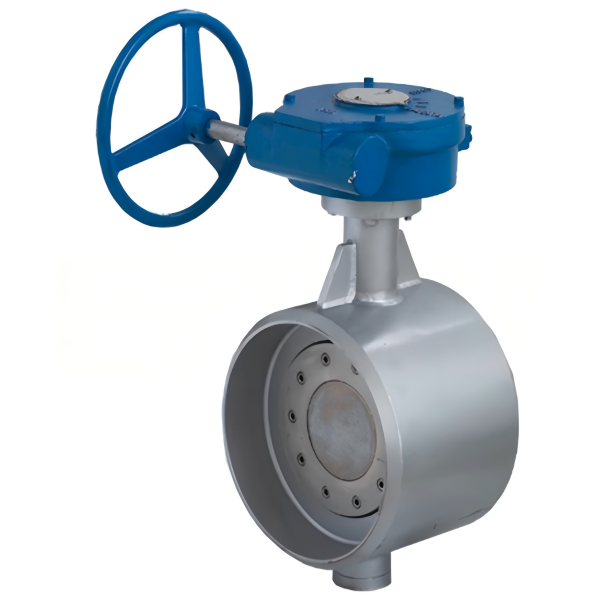
Butterfly valves have emerged as a cornerstone in modern fluid handling systems, offering a balance of simplicity, cost-efficiency, and versatility. Since their commercialization in the 1930s, these quarter-turn valves have evolved from basic shutoff devices to sophisticated control elements used in industries ranging from water treatment to nuclear power. This article explores the mechanics, materials, and advanced applications of butterfly valves, supported by engineering standards and real-world case studies.
1. Mechanics and Design Variations
A butterfly valve operates by rotating a disc (the "butterfly") within the valve body to regulate flow. The disc is connected to a stem, which is turned via a handle, gearbox, or actuator. Key design elements include:
- Disc: Typically made of metal (e.g., stainless steel, ductile iron) or lined with elastomers (e.g., EPDM, NBR) for sealing.
- Seat: Provides the sealing interface between the disc and body. Soft seats (e.g., rubber, PTFE) offer tight shutoff, while metal seats (e.g., Stellite, Inconel) withstand high temperatures and abrasive media.
- Body: Available in wafer, lug, or double-flanged configurations. Wafer designs are lightweight and cost-effective, while lug types allow dead-end service.
1.1 Concentric vs. Eccentric Disc Designs
- Concentric (Resilient-Seated): The stem is centered in the disc and the seat. This design is ideal for low-pressure applications (≤16 bar) with clean media (e.g., HVAC systems).
- Single Eccentric: The stem is offset from the disc center, reducing seat wear during opening/closing. Used in water distribution networks.
- Double Eccentric: The stem is offset both vertically and horizontally, enabling bubble-tight shutoff with minimal torque. Common in power plants and chemical processing.
- Triple Eccentric (High-Performance): Features a conical disc profile and three offsets, providing metal-to-metal sealing for high-pressure, high-temperature applications (e.g., steam systems).
2. Material Selection for Performance and Longevity
The choice of materials directly impacts a butterfly valve’s compatibility with fluids, pressure, and temperature.
2.1 Body and Disc Materials
- Ductile Iron (GGG50): Suitable for non-corrosive water and wastewater (temperature range: -10°C to 120°C).
- Carbon Steel (WCB, A216): Used in oil and gas for moderate pressures (≤40 bar) and temperatures (≤425°C).
- Stainless Steel (CF8/304, CF8M/316): Resists corrosion in chemical, food, and marine environments. 316L is FDA-approved for pharmaceutical applications.
- Hastelloy/Inconel: Employed in extreme conditions (e.g., seawater desalination, sulfuric acid plants).
2.2 Seat and Lining Materials
- EPDM (Ethylene Propylene Diene Monomer): Ideal for potable water and steam (≤120°C).
- NBR (Nitrile Butadiene Rubber): Resists oils and fuels (≤80°C).
- PTFE (Polytetrafluoroethylene): Withstands chemicals and high temperatures (≤200°C).
- Urethane Linings: Provide abrasion resistance for slurries (e.g., mining tailings).
3. Performance Standards and Compliance
Butterfly valves must adhere to international standards to ensure safety and reliability.
3.1 Key Standards
- API 609: Specifies design, testing, and qualification for butterfly valves. For example, a Class 150 wafer valve with EPDM seats is rated for 10 bar (145 psi) at 80°C.
- ISO 5752: Defines face-to-face dimensions for compatibility with piping systems.
- TA-Luft (VDI 2440): German standard for low-emission valves, limiting fugitive emissions to ≤50 ppm.
3.2 Leakage Classes
- Class A (ISO 5208): Zero detectable leakage under test conditions (e.g., helium mass spectrometry).
- Class IV (ANSI/FCI 70-2): Allows ≤0.01% of rated Cv in bubble-tight shutoff tests.
4. Applications Across Industries
Butterfly valves’ adaptability makes them indispensable in diverse sectors.
4.1 Water and Wastewater
- Municipal Water Treatment: Lug-style valves with EPDM seats control flow in distribution networks.
- Sewage Treatment: Resilient-seated valves with cavity-filled discs prevent clogging in sludge lines.
4.2 Oil and Gas
- Upstream: Triple-eccentric valves with metal seats handle high-pressure wellhead applications (up to 10,000 psi).
- Midstream: Full-bore valves minimize pressure drop in crude oil pipelines (e.g., 36-inch Class 300 valves).
- Downstream: Fire-safe valves (API 607) prevent leaks during refinery emergencies.
4.3 Chemical Processing
- Corrosive Media: Lined valves (PTFE/PFA) protect against hydrochloric acid and sodium hydroxide.
- Batch Processing: Double-flanged valves with pneumatic actuators enable automated control.
4.4 Power Generation
- Steam Systems: High-performance valves with graphite seats regulate superheated steam (600°C, 250 bar).
- Cooling Water: Wafer valves with NBR seats manage seawater intake in coastal plants.
5. Installation, Operation, and Maintenance
Proper practices extend butterfly valve lifespan and performance.
5.1 Installation Best Practices
-
Pipeline Alignment: Use laser alignment tools to avoid disc binding.
-
Actuator Sizing: Calculate torque requirements using formulas like:
Where = pressure, = disc area, = friction coefficient (0.1–0.3 for soft seats).
3. Pre-Commissioning:
- Hydrostatic test at 1.5× rated pressure for 10 minutes.
- Verify disc rotation (90° ± 2°).
5.2 Routine Maintenance
- Lubrication: Apply grease to stem bearings every 6–12 months. Use food-grade lubricants in sanitary applications.
- Seat Inspection: Replace soft seats every 3–5 years or after 20,000 cycles. Metal seats may last 10+ years but require hardness testing (Rockwell C scale).
- Stem Packing Adjustment: Tighten packing glands to prevent leaks without exceeding 25% of stem yield strength.
5.3 Troubleshooting Guide
| Symptom | Probable Cause | Recommended Action |
|---|---|---|
| Valve won’t open/close | Foreign object in disc cavity | Disassemble and clean; install a strainer upstream. |
| External leakage | Loose flange bolts | Retighten bolts to 70% of yield strength; replace gasket if damaged. |
| Internal leakage | Worn seat or scratched disc | Replace seat; re-surface disc if pitting exceeds 0.2 mm. |
| High operating torque | Corroded stem or misaligned disc | Lubricate stem; check for bearing wear; replace if pitting exceeds 0.1 mm. |
6. Advanced Butterfly Valve Technologies
6.1 Lined Butterfly Valves
For corrosive applications, valves are lined with PTFE, PFA, or rubber to protect the body. These are used in chemical processing and semiconductor manufacturing.
6.2 Cryogenic Butterfly Valves
Designed for LNG and hydrogen service, these valves use extended stems and vacuum-insulated bodies to maintain seat integrity at -196°C.
6.3 Smart Butterfly Valves
Integrated with IoT sensors, these valves monitor torque, temperature, and seat wear in real time, enabling predictive maintenance.
7. Future Trends
- Sustainable Materials: Development of bio-based elastomers for seat inserts to reduce environmental impact.
- 3D Printing: Additive manufacturing enables lightweight valve bodies with complex internal cooling channels.
- Digital Twins: Simulation of valve performance under varying conditions to optimize design and maintenance schedules.
Conclusion
Butterfly valves continue to evolve, driven by demands for efficiency, reliability, and sustainability. By selecting the right materials, adhering to installation standards, and implementing predictive maintenance, operators can ensure decades of trouble-free service. As industries embrace Industry 4.0 and green technologies, butterfly valves will remain at the forefront of fluid control innovation.
FAQs
Q1: Are butterfly valves suitable for throttling applications?
A: Standard resilient-seated valves are not recommended for throttling due to seat erosion. Use high-performance (triple-eccentric) or lined valves for precise flow control.
Q2: What is the difference between a wafer and lug-style butterfly valve?
A: Wafer valves are sandwiched between flanges and cannot be used as end-of-line isolation. Lug-style valves have threaded lugs, allowing bolt removal on one side for maintenance.
Q3: How often should butterfly valves be inspected?
A: Critical valves in hydrocarbon service should be inspected annually. Non-critical valves may be inspected every 2–3 years.
Q4: Can butterfly valves be repaired in-line?
A: Lug and double-flanged valves allow seat and disc replacement without pipeline disassembly. Wafer valves require full removal for repairs.
Q5: What is the maximum temperature rating for a butterfly valve?
A: Metal-seated valves can withstand temperatures up to 650°C (e.g., in supercritical power plants).